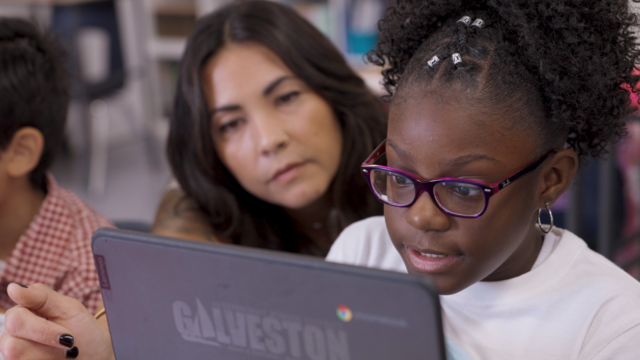

foobar

foobar

foobar

data id

503260

data

{"type":"default","seo":{"title":"Podcast: Embracing Data and Planning with It Feat. Latonia Grant in GA | Teachers in America | HMH","description":"Third grade teacher and HMH Teacher Ambassador Latonia Grant discusses how data has been a valuable tool in her planning and instruction. Plus she shares data-driven planning tips, like how to lead data talks with students and how to collaboratively plan with peers.","headercode":"","ogtitle":"Podcast: Embracing Data and Planning with It Feat. Latonia Grant","ogdescription":"Third grade teacher and HMH Teacher Ambassador Latonia Grant discusses how data has been a valuable tool in her planning and instruction. Plus she shares data-driven planning tips, like how to lead data talks with students and how to collaboratively plan with peers","ogimage":"https://s3.amazonaws.com/int-hmhco-vmg-craftcms-public/blog/WF1987500_Social-1200x628.png","seosettings":{"noIndexNoFollow":false,"showGtm":true},"keywords":"","canonical":""},"redirect":[],"entrysettings":{"includeinsearch":true,"showglobalmessaging":true},"globalsettings":{"standardheader":true,"standardfooter":true},"url":"/blog/podcast-embracing-data-and-planning-with-it-featuring-latonia-grant-in-ga-on-teachers-in-america","id":503260,"title":"Podcast: Embracing Data and Planning with It Feat. Latonia Grant in GA on Teachers in America","slug":"podcast-embracing-data-and-planning-with-it-featuring-latonia-grant-in-ga-on-teachers-in-america","bodycontainer":[{"type":"copy","headline":null,"richtext":"

Welcome back to Teachers in America, where we celebrate teachers and their lasting impact on students' learning journeys and lives.

\n

Today we are joined by HMH Teacher Ambassador and third grade teacher Latonia Grant. Latonia will dive into how she uses data to drive her lesson planning and instruction. Plus she will share helpful planning tips, like how to spiral lesson plans, how to collaboratively plan with peers, and how to use tools within Into Reading to save time while planning. 

","subheadline":null,"alignment":"left"},{"type":"socialmedia","headline":null,"subheadline":null,"richtext":null,"widgettype":"buzzsprout","url":"https://www.buzzsprout.com/266324/14901448-embracing-data-and-planning-with-it-with-latonia-grant.js?container_id=buzzsprout-player-14901448&player=small","width":null,"height":null,"size":"medium","posttype":"video","playerid":"14901448","headercode":null},{"type":"copy","headline":null,"richtext":"

A full transcript of the episode appears below; it has been edited for clarity.

\n

You can follow Teachers in America wherever you listen to podcasts. Subscribe on Apple Podcasts, Spotify, Google Podcasts, Stitcher, or iHeartRadio.

\n

Please consider rating, reviewing, and sharing Teachers in America with your network. We value our listeners' support and feedback. Email us at shaped@hmhco.com.

\n

The views expressed in this podcast are those of the guest and do not necessarily represent those of HMH.

","subheadline":null,"alignment":"left"},{"type":"copy","headline":null,"richtext":"

Noelle Morris: Welcome to Teachers in America, a podcast from HMH, where we connect with educators across the country to bring you teaching tips and inspiration. I’m your host, Noelle Morris. 

\n

Today we are joined by third grade teacher Latonia Grant, who will share how data has been a valuable tool in her planning and instruction.

\n

Latonia teaches in Columbia County School District in Georgia. Throughout her 16-year education career, she has strived to serve all her students as well as her fellow teachers. She is cure is an HMH Teacher Ambassador, providing support and guidance to thousands of educators in Teacher's Corner on Ed and our Facebook Group. And this summer she will be a presenter at the 2024 Model Schools Conference.

\n

In this episode, Latonia will provide data-driven planning tips, like how to lead data talks and set goals with students, and how to establish collaborative planning norms and expectations. Now, let’s get to the episode.

\n

Noelle Morris: Welcome, Latonia Grant, to Teachers in America.\nFor those of you who don’t know Latonia, I’m just going to give you a special\nintroduction to our listeners. Latonia is one of our Teacher Ambassadors. I want to let everybody know that she and I work together quite a\nbit. I am one of her biggest fans, and so you are going to probably hear a\nlittle bit of a different dynamic between the two of us. But welcome Latonia,\nand say hello. I don’t mean to tell you what to do, but you know and love me\nanyway. So, introduce yourself and welcome to Teachers in America, and\nwhat do you want to talk about today?

\n

Latonia Grant: Hello. I am Latonia Grant. I have been teaching for .\n. . this is year 16. And of those 16 years, the majority of them have been in\nthird grade. I also have experience with\nteaching second grade as well as fifth grade, and in different settings. I’ve\ndone collaborative, where I’ve been team teaching. I have done a three-man team\nbefore. I’ve also been self-contained. So, a little bit of everything. And today\nI just want to talk about, I’m very happy to plan and organize and how that\ndefinitely saves me a lot of time. And so, I’m excited to share that\ninformation with Ms. Noelle today.

\n
\"\"
Latonia uses Into Reading tools like the module carousel to \"happy plan\" effectively.
\n


\n

Noelle: Well, we talk about \"happy planning\" all the time. And\nso, Latonia, describe your approach to planning and how do you define \"happy\nplanning\"?

\n

Latonia: \"Happy planning\" is when definitely I can utilize my\ntime effectively. But I always like to start with the module carousel, kind of\nlike planning backwards per se. And so, I look at the module carousel, which\nleads me to our editable weekly lesson plans. And that of course leaves me\nlooking at each day. But with the editable weekly lesson plans, it allows me to\ngo ahead and see a week at a glance, exactly what it is, the skills that I need\nto assess my students over. That way I can make sure that I am utilizing my\ntime wisely when I am planning.

\n

Noelle: Now you just mentioned tools that are in our Into Reading\ncore reading program that you use. What do you bring to it with your planning? What\nare the essentials from a classroom teacher, knowing your students and other\ndata points that you’re bringing in to match the tools that you’re provided\nwithin the program?

\n

Latonia: Well, one: I definitely start off by building\nrelationships with my students—getting to know their personalities, their\nstrengths, things that they like, things that they’re interested in. And I’m\nvery fortunate that HMH already provides all of those different things with the\ndiversity that they include.

\n

And so with that, it’s easier\nfor me to tailor in the materials that are already there from Into Reading\nto what my students are needing at that particular time, so it makes it\nenjoyable for them. It also makes it enjoyable for me as well.

\n

Noelle: What does a good lesson plan look like to you? And\nthen how are you evaluating or observing that it truly was a great lesson?

\n

Latonia: I can definitely say with over the years of\nexperience and having to go from creating my own with little guidance as far as\nwhat they would like in there included. When I say they, I’m talking about\nadministration. What’s included in our lesson plan to having a blessing where\nwe have the editable weekly lesson plans, and I can tweak them to benefit the\nneeds of my students.

\n

It’s kind of like a foundational\npiece, and I love having that foundational piece because it saves time. I’m\nable to manipulate it in the way that I need to for my group of students. I\nlove the fact that it provides that foundational piece.

\n

Noelle: How are you spiraling your lessons? You talked about\nbackwards planning, so talk about backwards planning plus spiraling. Let’s talk about that in two\npoints. One, backwards planning wasn’t a new a new concept to you, but the\nspiraling is a newer concept [for you]. First, I want you to break it down, your initial\napproach to spiraling. How did you have to learn that and where are you now?

\n

Latonia: Originally when we started, I was so accustomed to\nteaching one standard the whole entire week. And so, for me as an educator, I\nhad to change my mindset and I also had to trust the process with the\nspiraling. With that being said, it was a little bit of “Okay. I really want to\nrevert back to the things that I was already doing” because it was sense of\ncomfort. But it was also understanding that there’s also a time for change and\nthere’s a reason why it spirals the way that it does.

\n

I went from trying to trust the\nprocess and teaching one standard at a time to now where I’m teaching several\ndifferent standards in one week and seeing that process where, okay, we’re going\nto come back to that again. We’re going to touch on that again, but we’re going\nto do it with a different text this time. And then seeing the results of\nmy students retaining that information was what was most beneficial for me. Because\nif I taught something the first nine weeks in the first quarter, then there’s\nno guarantee that they’ll remember it by the fourth nine weeks in quarter four.\nI love the fact that this program allows us to be able to spiral. So, they’re\nconstantly seeing it. It’s always fresh on their minds.

\n

Noelle: When you lesson plan now and you have that experience\nbehind you, and you’ve built this trust around a spiraling curriculum . . . Let’s\nthink about back-to-school time. What are you confident in thinking about with\nentering third graders from second grade because of spiraling that has been\nhappening since kindergarten?

\n

Latonia: Their reading. That’s one thing that is most\nimportant because we transition from second grade to third grade from them\nlearning to read, and now they’re reading to understand. Building in those\nconcepts, building in the comprehension, has been big, huge, huge, huge, huge—can’t\nexpress that enough—factor for us, when they’re coming to third grade. And the\nconsistency. So, they already know, “Hey, I’m already doing these things in\nlower grades. I see the anchor charts that we’re utilizing. The structure of\nthe format of the testing is the same.” And so, they become very comfortable\nwith that, familiar with that. It also creates nothing but success for them as\nwell.

\n

Noelle: You are a teacher that I have really appreciated how\nyou approach collaborative planning and you’re always thinking at first, “Well,\nlet me look at this from my perspective, but I want to take it to my team, to\nthe grade-level team.” What’s your approach in your school and with your grade-level\nteam around collaborative planning? What’s your structure? How did y’all\nestablish it? What are some of your norms?

\n

Latonia: Our norm is every week, every Wednesday because it’s\nkind of like the middle of the week, we always get together to start planning\nfor the next week. We do that so that way we can make sure we are definitely\nconsistent.

\n

If you walk in one classroom,\nyou see us doing the same things, whether it’s Turn and Talk or if we’re doing\ncore reading, and what we’re doing in our small group, and making sure that we’re\ntailoring it to our student communities. That’s one of the things that we go\nahead and set at the beginning of the year, that every Wednesday is our third\ngrade ELA team meeting where we get together. We look at our data. We look at\nour editable weekly lesson plans. We look at all the different events that we\nhave that are going on that week at school to see whether or not we need to\nshift some things. And then sometimes, whether or not we need to reteach a\nparticular skill, whether it is with the take and teach lesson plans. Or\nwhether or not we need to accelerate learning where we’re using the inquiry and\nresearch base. That allows us to remain accountable. It holds us accountable\nand makes sure that we have consistency. That has worked for us as a team.

\n
\"\"
Latonia has weekly collaborative planning meetings with her team to look at data and map out the week ahead.
\n


\n

Noelle: Has your team been consistent over the last three or\nfour years or have you had changes? How have y’all built yourselves a culture\nwithin your team?

\n

Latonia: I am fortunate to be the grade chair at my school and\non my team and leadership team. With that, I always like to, if we have a new\nmember, we get together over the summer so we can kind of get to know each\nother’s personalities and we just talk and discuss. Then if we have a new team\nmember, which we did this year, we go ahead and they ask the questions, we take\npictures of what the classroom looks like.

\n

I go ahead and show them the\ncurriculum so that way they’re not coming into it blindly. In addition to that,\nI’ve also had the privilege of serving on what is called our new teacher\ninduction program where I’m a guide and also a mentor. My job and my role and\nresponsibility is to make sure that they . . . I show them the ins and outs of\nthe program, how we utilize it, make sure that they don’t have any questions. If\nthey do have any questions, to provide clarification for them.

\n

That has worked with our team,\nespecially when we have new members. We’ve been very fortunate to have . . . right\nnow we have eight third grade teachers, and only one of them is new this year. Just\nproviding that support and meeting consistently like we do has made a world of\ndifference with our team and also our results and data with our students.

\n

Noelle: Do you have feedback from leadership that talks about\nhow even in data talks or data walks, what they notice about the\nconsistency in the collaboration?

\n

Latonia: Yes, third grade, our admin. As serving on the\nleadership team, we’re always constantly looking at data. Not just third grade,\nbut we’re looking at it school-wide. And so, when we’re looking at\nour Georgia milestones assessments, because we’re in state of Georgia, we can\nsee that for our school, our third-grade team was consistent with carrying the\nwhole entire school because of that consistency amongst us, making sure that we\nwere doing the routine.

\n

Procedures and spiraling and\nfocusing in on the data that we were supposed to. We get a lot of accolades\nfrom our administration with how our team operates. We’ve somewhat become the\nmodel grade level for the rest of the school because of that.

\n

Noelle: Do you have one or two collaborative planning\npractices that you attribute to being so strong in that team dynamic?

\n

Latonia: I think one, us understanding each other. Building\nrelationships with each other is definitely important. But two, us\ncollaborating and dividing and conquering the work is very beneficial with us.\nAnd filling in. Like the analogy, when you have the doves flying and one gets\ninjured, the other one takes the lead. We continue and we work cohesively\ntogether as a team. In addition to that, we also have an instructional\nspecialist where we have collaborative planning once every nine weeks. During\nthat time, we take our module data, we look at all of our standards, we check\nto see the areas that we are growing in and the areas that we need growth in. Just\nstaying consistent, making sure that we’re meeting the meeting norms, making\nsure that we’re following the routines and procedures that are in Into\nReading the way that they’re supposed to be has warranted us great success.

\n

Noelle: That’s nice. Do you have an instructional routine\nthat you would encourage every third-grade teacher to use? Even if it’s a\nteacher who’s just meeting us at HMH?

\n

Latonia: I definitely love Turn and Talk as far as what I’m\nteaching, because when they’re Turning and Talking, it provides so much\nin-depth conversation. Just to listen to their brains, and then they’re feeding\noff of each other. Whereas one question might be surface level, it ends up\ndiving into a whole deeper level, just because of that conversation. I always\nencourage them to allow the students to actually Turn and Talk and Discuss. And\nthen we end up finding out new information that we didn’t even know.

\n

Noelle: Now, how are you managing that Turning and Talking? How\ndid you train yourself? Because a lot of people would consider that type of\nroutine to be the simplest, to begin to implement and teach students the\nexpectations. But getting it to that level where they continue the conversation\nand take it deeper, is because it’s a routine that starts as they’re developing\nand growing. How did you set that up for yourself when they are Turning and Talking?\nWhat are you doing? And then how did you really train yourself to listen to\nthose moments of curiosity that could take you to the next step?

\n

Latonia: What I’m doing during that time is I’m walking around\nand I’m listening. We use the anchor chart where we talk about having a\ndiscussion that is in Into Reading. We talk about the appropriate way to\nhave a conversation, like what it means to listen, what it means to actually\nspeak. We start with that at the very beginning. They have a firm foundation of\nwhen I’m having a conversation as a listener, these are my expectations. As a\nspeaker, this is what I’m supposed to make sure that I’m doing. And so we\npractice that. But along with practicing that, I also like to utilize the\ntimer. The timer is like my best friend. I have them everywhere and that’s\njust because it’s time management. They turn, they talk, I set the timer, and\nthen when the timer goes off, their hands automatically go up because it’s been\nsomething that we practice since the beginning. And so, I walk around, I\nlisten. Sometimes I chime in, and I might ask a question.

\n

Other times some of them might\nhave a question for me because they’ve had a discussion and so it’s just a\nbeautiful thing. I keep looking at it that way because I keep seeing my\nstudents just having that conversation. It is definitely a beautiful thing and\nI walk around and I just facilitate and that allows them to take ownership of\ntheir own learning as well.

\n

Noelle: I agree too. As teachers we’re always visualizing. I\nwas wondering where. . . for those of you who are listening, Latonia and I can\nsee each other. We’re on a Zoom. And so I was wondering if somebody’s trying to\nget her attention. But it’s cool that you’re in\nyour classroom and you’re looking to see where the great things and the\nexciting things happen. In third grade, you really do want to start seeing that\nagency, the facility moved to agency. 

\n

Now let’s talk about data, right? You are\nalso a teacher that. . . you almost get giggly when we talk about data, which I\nlove. I find that to be a passion,\nbecause understanding the numbers to be as precise as you can in a decision is\none of the number one ways as a teacher to have confidence and\nsee the return on your instructional investment. Where do your investments\nstart? What data is tried and true? And then let’s talk about the data that you\nuse weekly as well.

\n

Latonia: Definitely. I’m always observing. I think that’s just\nnatural. I start with student accountability because I want to work hard, but I\nwant them to work hard too. I shouldn’t be working harder than they are is how\nI feel. I’m doing a mini lesson, then I always have them check for their level\nof understanding. And so they rate themselves. Are they a level one? Which\nmeans, “Hey, I don’t have it. I have no idea where to start.” Are they a level\ntwo? Which means, “Hey, I’ve got a little bit, but I need some more assistance.”

\n

I always tell them we’re\nshooting for level threes and level fours. That level three means, “I’m\ncomfortable and I can do it on my own”. I tell them a level four is where you\ncan go home and you can teach that lesson that I did for that day. I told them\nthat’s the ultimate goal. And so, when we talk about that at the beginning, it\nstarts of course with their student accountability again.

\n

They are more invested in their learning,\nand they want to be at a level four, and then they want to see that success. But\nit also gives them time to reflect on, \"Did I truly understand what Ms. Grant\njust got through teaching? And if I didn’t, then I know that I need extra\nassistance in this,\" which allows that conversation for me and that student to\nhave, and then for me to provide that extra support as well.

\n

Latonia: We also set goals. We’re always setting\ngoals of what we can do better, how we can improve. But I also think one of the\nmost important things is I tell them I’m human, so I am always willing to learn\nand grow myself, no matter how much I have. Them seeing me as a person that’s\nlike, “Oh, well, my teacher’s learning and growing too, or she can learn new\nstuff from me as well.” It just creates a learning environment where we’re all\ncohesively as one.

\n

Noelle: What are some of your reflective questioning or\nstatements that you have taught your students that they can immediately get\ntheir results and they automatically go into a reflective thinking?

\n

Latonia: Let’s say for instance, if we were doing a lesson\ntoday over central idea, one of my questions I ask them. . . We get up and I’m\nteaching and I’m using the anchor chart, the Display and Engage, and then I’m\nlike, “Okay, does everybody understand this? Give me a thumbs up.” So, we\ncommunicate a lot. I’m always constantly asking questions.

\n

Is everybody good? Is there\nanything that I need to clarify? Okay. Remember? And then I just give them\nlittle tidbits along the way so that way when they’re working independently, they\nare reflecting on the questions that I ask. Or I model the thinking process. If\nI’m doing this problem or I’m trying to figure this out, for instance,\nsynthesizing, \"I originally thought that milk\nwas yogurt.\" We were talking about that the other day, right? That yogurt was\nlike spoiled milk. But then I had to go and I had to read and I was like, “Okay,\nyeah. Kind of, but not really because they warm it up and then they added\nbacteria and so forth.”

\n

So then my thinking changed, and\nthey were looking at me modeling my thought process, because I’m human too and\nI’m learning as well. They were like, “Okay, I can do that.” And then they\napply it. I just constantly ask questions to scaffold their learning. Then we\nhave certain questions that I might be like, “Okay, well what do you do with\nthat?” Or just expand on their\nlearning. It basically depends on the conversation that we’re having. Sometimes\nI might be like, “I don’t know. I’ve got to go look that up.” And then it leads\ninto them wanting to stump me and ask questions. So, it just works.

\n

Noelle: I love that. And for the yogurt fan in your class,\nthey’re probably like “Thank goodness it’s not spoiled milk.” Because one thing\nas humans most of us have had some sort of experience with spoiled milk. I\nthink it’s something that is a human bond, for those of us who are milk\ndrinkers.

\n

And I love that you’ve built\nthat into your classroom. I don’t know. Let me check that out. Let me read\nfurther. Tell us about a time where you were starting to set goals with\nstudents and you were like, “I don’t know if these one or two students are\nunderstanding how to set goals,” and then they totally surprised you and set\none.

\n

You were like, “Okay, well y’all\ndo have it now. Let’s go with it.”

\n

Latonia: Yes. We utilize folders where the students actually\ndo set their goals and they track their data. Let’s say for instance in module\none, they might have scored a 75—just throwing that out there. Then they set a\ngoal of, well the next time I want to score 90. And I’m like, “Okay, well you\ndo understand. . .” Because we usually set goals in increments of three to five\npoints or percentage points. “That means that you’re going to have to work on\nthis, this, this, and this.” And then they do take the initiative to work on\nthat, whether we’re doing station rotation literacy centers or when we’re in\nsmall group, and they have completely surprised me that they made it. But the\nexpression on their face, wish you could see my face, the expression on their\nface when they do meet that goal is what we’re teaching for, because they’ve\nmet that level of success.

\n

And I just keep encouraging them.\nIt’s the environment. It’s the knowing that they can do it. It’s believing in\nthemselves. And so, we also always start off with our morning meeting, where\nwithin our morning meeting, we’re talking about the things that we want to do\ntoday: self-reflecting, positive self-talk, so forth. So we tie all of that in to\nwhat they’re doing in the classroom.

\n

Noelle: Now, as we wrap up our conversation, if I’m new to data\ntalks and getting this in motion, what’s the first step I need to take?

\n

Latonia: One, making sure that you yourself understand the\ndata is important. Two, understanding that we’re looking at this as a process\nof growth.

\n

We’re looking at the things that\nwe’re doing well, and the areas that we want to grow in. We’re taking that into\nmind as a new teacher, new student.

\n

Noelle: Oh, I was thinking about it not even just as a new\nteacher. For many of us, data talking and building that in is still something\nthat we’re working on as instructional time. This should be considered\ninstructional time, do you agree?

\n

Latonia: Yes, it is instructional time. We built it in so much\nwhere our kids want instant feedback. Even today, they were like, “What score\ndid I make?” And I’m like, “Baby, you got to give me a second because I got to\ngrade your instructor response.”

\n

But they’re eager to know how\nwell they did, and which questions they missed, and why they missed it, and so\nforth. So, we automatically build in data talks every Friday. Every Friday is\nour chance to conference with our students to talk about what it is that they\ndid well, what they didn’t do well, or areas that they need to grow in, and\nthen what we’re going to do to make sure that they do grow in that area. That’s\nthe thing that’s important as well. Not just talking about it, but what are my\nnext steps? Having that conversation, and them knowing, \"This is\nwhat is expected of me, this is what I need to focus on, this is what I need to\npractice to help me get there,\" is what our data talks end up being about. If\nyou’re just starting out, just start small. Start with maybe your goal. You\nmight not be able to get to see all of your students on Friday. Or you might do\na rotation where you’re seeing five students or, every so often, however it is\nthat allows in your schedule.

\n

But just start small with having\nthat conversation, because once they see that you’re invested, then they’re\nbecoming even more invested. With third graders, they want to please us and\nthey want to make us happy and they want to make us proud. And then I’m just\nextra because then I do all this extra stuff when they do meet their goals. Even if they don’t, I still\ncelebrate them for the growth that they did. It’s just changing your mindset of\nlooking at all the great things that they are doing and how they’re climbing\nand growing versus so much focus on the areas that they need growth in\nsometimes.

\n
\"\"
Latonia meets with her students regularly for data talks and helps them set data-centered learning goals.
\n


\n

Noelle: Solid, solid advice. Now here’s one last question. Why\nteach third grade? You’ve had a span of experiences, but why third grade?

\n

Latonia: I chose third grade because I wanted a challenge. For\nus as the state of Georgia, third grade is the first year where they are taking\na state test. For me, just personally, I want them to feel comfortable.

\n

I want them to understand that\nit’s okay that they already got it, and they already know it. Then seeing the\ngrowth and the happiness and the success at the end. When they do master the\nskills and they score higher than they anticipated and everybody’s jumping, and\nour principals are excited, and our parents are engaged and like, “Oh my gosh,\nI was so worried.” I’m like, \"What you worried for?\nBecause I wasn’t worried at all.\" Just that within itself of knowing this is a\nchallenge and I need to get them here. It also holds me accountable. But they’re\nalready going to be prepared anyway because Into Reading does that for\nus and it makes it so much easier.

\n

That’s why third grade, and they\nstill love us. They still love, and I still get the notes. So, yeah, I like third\ngrade.

\n

Noelle: Well, thank you for that and I appreciate your time.\nThank you for coming on Teachers in America and having this conversation\nwith me. And guess what, we’ll be having another conversation probably right\nafter this, or definitely in the following weeks because pretty much Latonia\nand I get a chance to talk every day. And now I got to bring her to all of our\nlisteners out there, to our podcast. So, thank you, Latonia. And tell your\nfamily thank you for letting us have a little bit more of your time today.

\n

Latonia: I will. Thank you for having me.

\n

Noelle: Of course. Bye!

\n

Latonia: Bye!

\n

Noelle: If you or someone you know would like to be a guest on the Teachers in America podcast, please email us at shaped@hmhco.com. Be the first to hear new episodes of Teachers in America by subscribing on Apple Podcasts, Spotify, or wherever you listen to podcasts. If you enjoy today's show, please rate, review, and share it with your network. You can find the transcript of this episode on our Shaped blog by visiting hmhco.com/shaped. The link is in the show notes. Teachers in America is produced by HMH. Until next time, your friend, Noelle.

\n

The Teachers in America podcast is a production of HMH. Executive producers are Christine Condon and Tim Lee. Editorial direction is by Christine Condon. It is creatively directed, and audio engineered by Tim Lee. Our producer and editor is Jennifer Corujo. Production designers are Mio Frye and Thomas Velazquez. Shaped blog post editors for the podcast are Christine Condon, Jennifer Corujo, and Alicia Ivory.  

\n

Thanks again for listening!

\n

***

\n

See how Into Reading provides actionable data and insights to inform instruction that best meets the needs of each student.

\n

Hear new episodes of Teachers in America on Shaped, Apple Podcasts, Spotify, or wherever you listen to podcasts.

","subheadline":null,"alignment":"left"},{"type":"ctamodule","headline":null,"richtext":"

Hear more of Teachers in America on Shaped

","color":"green-tint","displaydropdown":"stickycta","mediadisplay":"","subheadline":null,"cta":[{"linktype":"pill","url":"https://www.hmhco.com/blog/podcast-teachers-in-america","linkurl":"https://www.hmhco.com/blog/podcast-teachers-in-america","linktext":"Listen Now","opennewwindow":false,"className":["button","pill","small"],"index":0}]}],"postDate":"2024-04-18T09:00:00-04:00","postUpdatedDate":"2024-05-02T14:34:06-04:00","section":"blog","duration":"23","media":{"type":"image","caption":null,"image":"https://s3.amazonaws.com/int-hmhco-vmg-craftcms-public/blog/WF1987500_Hero-Banner.png","height":900,"width":1600,"title":"WF1987500 Hero Banner","alignment":"not-set","asLightbox":false,"style":"not-set","transforms":{"large":{"image":"https://s3.amazonaws.com/int-hmhco-vmg-craftcms-public/_transforms/blog/_large/WF1987500_Hero-Banner.png","height":540,"width":960,"title":"WF1987500 Hero Banner"},"medium":{"image":"https://s3.amazonaws.com/int-hmhco-vmg-craftcms-public/_transforms/blog/_medium/WF1987500_Hero-Banner.png","height":360,"width":640,"title":"WF1987500 Hero Banner"},"small":{"image":"https://s3.amazonaws.com/int-hmhco-vmg-craftcms-public/_transforms/blog/_small/WF1987500_Hero-Banner.png","height":180,"width":320,"title":"WF1987500 Hero Banner"},"xlarge":{"image":"https://s3.amazonaws.com/int-hmhco-vmg-craftcms-public/_transforms/blog/_xlarge/WF1987500_Hero-Banner.png","height":720,"width":1280,"title":"WF1987500 Hero Banner"}},"mediasize":"large","isHero":true},"textLabel":"

Podcast

","authors":[{"title":"Jennifer Corujo","name":"Jennifer Corujo","prefix":null,"suffix":null,"description":"Shaped Editor","url":"https://web-delivery-v1.int.webnp.hmhco.com/people/jennifer-corujo","media":{"type":"image","caption":null,"image":"https://s3.amazonaws.com/int-hmhco-vmg-craftcms-public/people/JenniferCorujo.jpg","height":378,"width":378,"title":"Jennifer Corujo","alignment":"not-set","asLightbox":false,"style":"not-set","transforms":{"large":{"image":"https://s3.amazonaws.com/int-hmhco-vmg-craftcms-public/_transforms/people/_large/JenniferCorujo.jpg","height":960,"width":960,"title":"Jennifer Corujo"},"medium":{"image":"https://s3.amazonaws.com/int-hmhco-vmg-craftcms-public/_transforms/people/_medium/JenniferCorujo.jpg","height":640,"width":640,"title":"Jennifer Corujo"},"small":{"image":"https://s3.amazonaws.com/int-hmhco-vmg-craftcms-public/_transforms/people/_small/JenniferCorujo.jpg","height":320,"width":320,"title":"Jennifer Corujo"},"xlarge":{"image":"https://s3.amazonaws.com/int-hmhco-vmg-craftcms-public/_transforms/people/_xlarge/JenniferCorujo.jpg","height":1280,"width":1280,"title":"Jennifer Corujo"}},"mediasize":"medium"}}],"contributors":[],"tags":[{"title":"Podcast","slug":"podcast"},{"title":"Literacy","slug":"literacy"}],"sidebarcontent":{"headline":"

Listen to the Latest Episodes

","richtext":"

Hear more of Teachers in America on Shaped.

","color":"green-tint","cta":[{"linktype":"url","url":"https://www.hmhco.com/blog/podcast-teachers-in-america","linkurl":"https://www.hmhco.com/blog/podcast-teachers-in-america","linktext":"Listen Now","opennewwindow":false}]},"featuredentrysettings":{"showrelatedreading":true,"showasfeatured":true}}

Podcast

Podcast: Embracing Data and Planning with It Feat. Latonia Grant in GA on Teachers in America

23 Min Read
WF1987500 Hero Banner

Welcome back to Teachers in America, where we celebrate teachers and their lasting impact on students' learning journeys and lives.

Today we are joined by HMH Teacher Ambassador and third grade teacher Latonia Grant. Latonia will dive into how she uses data to drive her lesson planning and instruction. Plus she will share helpful planning tips, like how to spiral lesson plans, how to collaboratively plan with peers, and how to use tools within Into Reading to save time while planning. 

A full transcript of the episode appears below; it has been edited for clarity.

You can follow Teachers in America wherever you listen to podcasts. Subscribe on Apple Podcasts, Spotify, Google Podcasts, Stitcher, or iHeartRadio.

Please consider rating, reviewing, and sharing Teachers in America with your network. We value our listeners' support and feedback. Email us at shaped@hmhco.com.

The views expressed in this podcast are those of the guest and do not necessarily represent those of HMH.

Noelle Morris: Welcome to Teachers in America, a podcast from HMH, where we connect with educators across the country to bring you teaching tips and inspiration. I’m your host, Noelle Morris. 

Today we are joined by third grade teacher Latonia Grant, who will share how data has been a valuable tool in her planning and instruction.

Latonia teaches in Columbia County School District in Georgia. Throughout her 16-year education career, she has strived to serve all her students as well as her fellow teachers. She is cure is an HMH Teacher Ambassador, providing support and guidance to thousands of educators in Teacher's Corner on Ed and our Facebook Group. And this summer she will be a presenter at the 2024 Model Schools Conference.

In this episode, Latonia will provide data-driven planning tips, like how to lead data talks and set goals with students, and how to establish collaborative planning norms and expectations. Now, let’s get to the episode.

Noelle Morris: Welcome, Latonia Grant, to Teachers in America. For those of you who don’t know Latonia, I’m just going to give you a special introduction to our listeners. Latonia is one of our Teacher Ambassadors. I want to let everybody know that she and I work together quite a bit. I am one of her biggest fans, and so you are going to probably hear a little bit of a different dynamic between the two of us. But welcome Latonia, and say hello. I don’t mean to tell you what to do, but you know and love me anyway. So, introduce yourself and welcome to Teachers in America, and what do you want to talk about today?

Latonia Grant: Hello. I am Latonia Grant. I have been teaching for . . . this is year 16. And of those 16 years, the majority of them have been in third grade. I also have experience with teaching second grade as well as fifth grade, and in different settings. I’ve done collaborative, where I’ve been team teaching. I have done a three-man team before. I’ve also been self-contained. So, a little bit of everything. And today I just want to talk about, I’m very happy to plan and organize and how that definitely saves me a lot of time. And so, I’m excited to share that information with Ms. Noelle today.

Latonia uses Into Reading tools like the module carousel to "happy plan" effectively.


Noelle: Well, we talk about "happy planning" all the time. And so, Latonia, describe your approach to planning and how do you define "happy planning"?

Latonia: "Happy planning" is when definitely I can utilize my time effectively. But I always like to start with the module carousel, kind of like planning backwards per se. And so, I look at the module carousel, which leads me to our editable weekly lesson plans. And that of course leaves me looking at each day. But with the editable weekly lesson plans, it allows me to go ahead and see a week at a glance, exactly what it is, the skills that I need to assess my students over. That way I can make sure that I am utilizing my time wisely when I am planning.

Noelle: Now you just mentioned tools that are in our Into Reading core reading program that you use. What do you bring to it with your planning? What are the essentials from a classroom teacher, knowing your students and other data points that you’re bringing in to match the tools that you’re provided within the program?

Latonia: Well, one: I definitely start off by building relationships with my students—getting to know their personalities, their strengths, things that they like, things that they’re interested in. And I’m very fortunate that HMH already provides all of those different things with the diversity that they include.

And so with that, it’s easier for me to tailor in the materials that are already there from Into Reading to what my students are needing at that particular time, so it makes it enjoyable for them. It also makes it enjoyable for me as well.

Noelle: What does a good lesson plan look like to you? And then how are you evaluating or observing that it truly was a great lesson?

Latonia: I can definitely say with over the years of experience and having to go from creating my own with little guidance as far as what they would like in there included. When I say they, I’m talking about administration. What’s included in our lesson plan to having a blessing where we have the editable weekly lesson plans, and I can tweak them to benefit the needs of my students.

It’s kind of like a foundational piece, and I love having that foundational piece because it saves time. I’m able to manipulate it in the way that I need to for my group of students. I love the fact that it provides that foundational piece.

Noelle: How are you spiraling your lessons? You talked about backwards planning, so talk about backwards planning plus spiraling. Let’s talk about that in two points. One, backwards planning wasn’t a new a new concept to you, but the spiraling is a newer concept [for you]. First, I want you to break it down, your initial approach to spiraling. How did you have to learn that and where are you now?

Latonia: Originally when we started, I was so accustomed to teaching one standard the whole entire week. And so, for me as an educator, I had to change my mindset and I also had to trust the process with the spiraling. With that being said, it was a little bit of “Okay. I really want to revert back to the things that I was already doing” because it was sense of comfort. But it was also understanding that there’s also a time for change and there’s a reason why it spirals the way that it does.

I went from trying to trust the process and teaching one standard at a time to now where I’m teaching several different standards in one week and seeing that process where, okay, we’re going to come back to that again. We’re going to touch on that again, but we’re going to do it with a different text this time. And then seeing the results of my students retaining that information was what was most beneficial for me. Because if I taught something the first nine weeks in the first quarter, then there’s no guarantee that they’ll remember it by the fourth nine weeks in quarter four. I love the fact that this program allows us to be able to spiral. So, they’re constantly seeing it. It’s always fresh on their minds.

Noelle: When you lesson plan now and you have that experience behind you, and you’ve built this trust around a spiraling curriculum . . . Let’s think about back-to-school time. What are you confident in thinking about with entering third graders from second grade because of spiraling that has been happening since kindergarten?

Latonia: Their reading. That’s one thing that is most important because we transition from second grade to third grade from them learning to read, and now they’re reading to understand. Building in those concepts, building in the comprehension, has been big, huge, huge, huge, huge—can’t express that enough—factor for us, when they’re coming to third grade. And the consistency. So, they already know, “Hey, I’m already doing these things in lower grades. I see the anchor charts that we’re utilizing. The structure of the format of the testing is the same.” And so, they become very comfortable with that, familiar with that. It also creates nothing but success for them as well.

Noelle: You are a teacher that I have really appreciated how you approach collaborative planning and you’re always thinking at first, “Well, let me look at this from my perspective, but I want to take it to my team, to the grade-level team.” What’s your approach in your school and with your grade-level team around collaborative planning? What’s your structure? How did y’all establish it? What are some of your norms?

Latonia: Our norm is every week, every Wednesday because it’s kind of like the middle of the week, we always get together to start planning for the next week. We do that so that way we can make sure we are definitely consistent.

If you walk in one classroom, you see us doing the same things, whether it’s Turn and Talk or if we’re doing core reading, and what we’re doing in our small group, and making sure that we’re tailoring it to our student communities. That’s one of the things that we go ahead and set at the beginning of the year, that every Wednesday is our third grade ELA team meeting where we get together. We look at our data. We look at our editable weekly lesson plans. We look at all the different events that we have that are going on that week at school to see whether or not we need to shift some things. And then sometimes, whether or not we need to reteach a particular skill, whether it is with the take and teach lesson plans. Or whether or not we need to accelerate learning where we’re using the inquiry and research base. That allows us to remain accountable. It holds us accountable and makes sure that we have consistency. That has worked for us as a team.

Latonia has weekly collaborative planning meetings with her team to look at data and map out the week ahead.


Noelle: Has your team been consistent over the last three or four years or have you had changes? How have y’all built yourselves a culture within your team?

Latonia: I am fortunate to be the grade chair at my school and on my team and leadership team. With that, I always like to, if we have a new member, we get together over the summer so we can kind of get to know each other’s personalities and we just talk and discuss. Then if we have a new team member, which we did this year, we go ahead and they ask the questions, we take pictures of what the classroom looks like.

I go ahead and show them the curriculum so that way they’re not coming into it blindly. In addition to that, I’ve also had the privilege of serving on what is called our new teacher induction program where I’m a guide and also a mentor. My job and my role and responsibility is to make sure that they . . . I show them the ins and outs of the program, how we utilize it, make sure that they don’t have any questions. If they do have any questions, to provide clarification for them.

That has worked with our team, especially when we have new members. We’ve been very fortunate to have . . . right now we have eight third grade teachers, and only one of them is new this year. Just providing that support and meeting consistently like we do has made a world of difference with our team and also our results and data with our students.

Noelle: Do you have feedback from leadership that talks about how even in data talks or data walks, what they notice about the consistency in the collaboration?

Latonia: Yes, third grade, our admin. As serving on the leadership team, we’re always constantly looking at data. Not just third grade, but we’re looking at it school-wide. And so, when we’re looking at our Georgia milestones assessments, because we’re in state of Georgia, we can see that for our school, our third-grade team was consistent with carrying the whole entire school because of that consistency amongst us, making sure that we were doing the routine.

Procedures and spiraling and focusing in on the data that we were supposed to. We get a lot of accolades from our administration with how our team operates. We’ve somewhat become the model grade level for the rest of the school because of that.

Noelle: Do you have one or two collaborative planning practices that you attribute to being so strong in that team dynamic?

Latonia: I think one, us understanding each other. Building relationships with each other is definitely important. But two, us collaborating and dividing and conquering the work is very beneficial with us. And filling in. Like the analogy, when you have the doves flying and one gets injured, the other one takes the lead. We continue and we work cohesively together as a team. In addition to that, we also have an instructional specialist where we have collaborative planning once every nine weeks. During that time, we take our module data, we look at all of our standards, we check to see the areas that we are growing in and the areas that we need growth in. Just staying consistent, making sure that we’re meeting the meeting norms, making sure that we’re following the routines and procedures that are in Into Reading the way that they’re supposed to be has warranted us great success.

Noelle: That’s nice. Do you have an instructional routine that you would encourage every third-grade teacher to use? Even if it’s a teacher who’s just meeting us at HMH?

Latonia: I definitely love Turn and Talk as far as what I’m teaching, because when they’re Turning and Talking, it provides so much in-depth conversation. Just to listen to their brains, and then they’re feeding off of each other. Whereas one question might be surface level, it ends up diving into a whole deeper level, just because of that conversation. I always encourage them to allow the students to actually Turn and Talk and Discuss. And then we end up finding out new information that we didn’t even know.

Noelle: Now, how are you managing that Turning and Talking? How did you train yourself? Because a lot of people would consider that type of routine to be the simplest, to begin to implement and teach students the expectations. But getting it to that level where they continue the conversation and take it deeper, is because it’s a routine that starts as they’re developing and growing. How did you set that up for yourself when they are Turning and Talking? What are you doing? And then how did you really train yourself to listen to those moments of curiosity that could take you to the next step?

Latonia: What I’m doing during that time is I’m walking around and I’m listening. We use the anchor chart where we talk about having a discussion that is in Into Reading. We talk about the appropriate way to have a conversation, like what it means to listen, what it means to actually speak. We start with that at the very beginning. They have a firm foundation of when I’m having a conversation as a listener, these are my expectations. As a speaker, this is what I’m supposed to make sure that I’m doing. And so we practice that. But along with practicing that, I also like to utilize the timer. The timer is like my best friend. I have them everywhere and that’s just because it’s time management. They turn, they talk, I set the timer, and then when the timer goes off, their hands automatically go up because it’s been something that we practice since the beginning. And so, I walk around, I listen. Sometimes I chime in, and I might ask a question.

Other times some of them might have a question for me because they’ve had a discussion and so it’s just a beautiful thing. I keep looking at it that way because I keep seeing my students just having that conversation. It is definitely a beautiful thing and I walk around and I just facilitate and that allows them to take ownership of their own learning as well.

Noelle: I agree too. As teachers we’re always visualizing. I was wondering where. . . for those of you who are listening, Latonia and I can see each other. We’re on a Zoom. And so I was wondering if somebody’s trying to get her attention. But it’s cool that you’re in your classroom and you’re looking to see where the great things and the exciting things happen. In third grade, you really do want to start seeing that agency, the facility moved to agency. 

Now let’s talk about data, right? You are also a teacher that. . . you almost get giggly when we talk about data, which I love. I find that to be a passion, because understanding the numbers to be as precise as you can in a decision is one of the number one ways as a teacher to have confidence and see the return on your instructional investment. Where do your investments start? What data is tried and true? And then let’s talk about the data that you use weekly as well.

Latonia: Definitely. I’m always observing. I think that’s just natural. I start with student accountability because I want to work hard, but I want them to work hard too. I shouldn’t be working harder than they are is how I feel. I’m doing a mini lesson, then I always have them check for their level of understanding. And so they rate themselves. Are they a level one? Which means, “Hey, I don’t have it. I have no idea where to start.” Are they a level two? Which means, “Hey, I’ve got a little bit, but I need some more assistance.”

I always tell them we’re shooting for level threes and level fours. That level three means, “I’m comfortable and I can do it on my own”. I tell them a level four is where you can go home and you can teach that lesson that I did for that day. I told them that’s the ultimate goal. And so, when we talk about that at the beginning, it starts of course with their student accountability again.

They are more invested in their learning, and they want to be at a level four, and then they want to see that success. But it also gives them time to reflect on, "Did I truly understand what Ms. Grant just got through teaching? And if I didn’t, then I know that I need extra assistance in this," which allows that conversation for me and that student to have, and then for me to provide that extra support as well.

Latonia: We also set goals. We’re always setting goals of what we can do better, how we can improve. But I also think one of the most important things is I tell them I’m human, so I am always willing to learn and grow myself, no matter how much I have. Them seeing me as a person that’s like, “Oh, well, my teacher’s learning and growing too, or she can learn new stuff from me as well.” It just creates a learning environment where we’re all cohesively as one.

Noelle: What are some of your reflective questioning or statements that you have taught your students that they can immediately get their results and they automatically go into a reflective thinking?

Latonia: Let’s say for instance, if we were doing a lesson today over central idea, one of my questions I ask them. . . We get up and I’m teaching and I’m using the anchor chart, the Display and Engage, and then I’m like, “Okay, does everybody understand this? Give me a thumbs up.” So, we communicate a lot. I’m always constantly asking questions.

Is everybody good? Is there anything that I need to clarify? Okay. Remember? And then I just give them little tidbits along the way so that way when they’re working independently, they are reflecting on the questions that I ask. Or I model the thinking process. If I’m doing this problem or I’m trying to figure this out, for instance, synthesizing, "I originally thought that milk was yogurt." We were talking about that the other day, right? That yogurt was like spoiled milk. But then I had to go and I had to read and I was like, “Okay, yeah. Kind of, but not really because they warm it up and then they added bacteria and so forth.”

So then my thinking changed, and they were looking at me modeling my thought process, because I’m human too and I’m learning as well. They were like, “Okay, I can do that.” And then they apply it. I just constantly ask questions to scaffold their learning. Then we have certain questions that I might be like, “Okay, well what do you do with that?” Or just expand on their learning. It basically depends on the conversation that we’re having. Sometimes I might be like, “I don’t know. I’ve got to go look that up.” And then it leads into them wanting to stump me and ask questions. So, it just works.

Noelle: I love that. And for the yogurt fan in your class, they’re probably like “Thank goodness it’s not spoiled milk.” Because one thing as humans most of us have had some sort of experience with spoiled milk. I think it’s something that is a human bond, for those of us who are milk drinkers.

And I love that you’ve built that into your classroom. I don’t know. Let me check that out. Let me read further. Tell us about a time where you were starting to set goals with students and you were like, “I don’t know if these one or two students are understanding how to set goals,” and then they totally surprised you and set one.

You were like, “Okay, well y’all do have it now. Let’s go with it.”

Latonia: Yes. We utilize folders where the students actually do set their goals and they track their data. Let’s say for instance in module one, they might have scored a 75—just throwing that out there. Then they set a goal of, well the next time I want to score 90. And I’m like, “Okay, well you do understand. . .” Because we usually set goals in increments of three to five points or percentage points. “That means that you’re going to have to work on this, this, this, and this.” And then they do take the initiative to work on that, whether we’re doing station rotation literacy centers or when we’re in small group, and they have completely surprised me that they made it. But the expression on their face, wish you could see my face, the expression on their face when they do meet that goal is what we’re teaching for, because they’ve met that level of success.

And I just keep encouraging them. It’s the environment. It’s the knowing that they can do it. It’s believing in themselves. And so, we also always start off with our morning meeting, where within our morning meeting, we’re talking about the things that we want to do today: self-reflecting, positive self-talk, so forth. So we tie all of that in to what they’re doing in the classroom.

Noelle: Now, as we wrap up our conversation, if I’m new to data talks and getting this in motion, what’s the first step I need to take?

Latonia: One, making sure that you yourself understand the data is important. Two, understanding that we’re looking at this as a process of growth.

We’re looking at the things that we’re doing well, and the areas that we want to grow in. We’re taking that into mind as a new teacher, new student.

Noelle: Oh, I was thinking about it not even just as a new teacher. For many of us, data talking and building that in is still something that we’re working on as instructional time. This should be considered instructional time, do you agree?

Latonia: Yes, it is instructional time. We built it in so much where our kids want instant feedback. Even today, they were like, “What score did I make?” And I’m like, “Baby, you got to give me a second because I got to grade your instructor response.”

But they’re eager to know how well they did, and which questions they missed, and why they missed it, and so forth. So, we automatically build in data talks every Friday. Every Friday is our chance to conference with our students to talk about what it is that they did well, what they didn’t do well, or areas that they need to grow in, and then what we’re going to do to make sure that they do grow in that area. That’s the thing that’s important as well. Not just talking about it, but what are my next steps? Having that conversation, and them knowing, "This is what is expected of me, this is what I need to focus on, this is what I need to practice to help me get there," is what our data talks end up being about. If you’re just starting out, just start small. Start with maybe your goal. You might not be able to get to see all of your students on Friday. Or you might do a rotation where you’re seeing five students or, every so often, however it is that allows in your schedule.

But just start small with having that conversation, because once they see that you’re invested, then they’re becoming even more invested. With third graders, they want to please us and they want to make us happy and they want to make us proud. And then I’m just extra because then I do all this extra stuff when they do meet their goals. Even if they don’t, I still celebrate them for the growth that they did. It’s just changing your mindset of looking at all the great things that they are doing and how they’re climbing and growing versus so much focus on the areas that they need growth in sometimes.

Latonia meets with her students regularly for data talks and helps them set data-centered learning goals.


Noelle: Solid, solid advice. Now here’s one last question. Why teach third grade? You’ve had a span of experiences, but why third grade?

Latonia: I chose third grade because I wanted a challenge. For us as the state of Georgia, third grade is the first year where they are taking a state test. For me, just personally, I want them to feel comfortable.

I want them to understand that it’s okay that they already got it, and they already know it. Then seeing the growth and the happiness and the success at the end. When they do master the skills and they score higher than they anticipated and everybody’s jumping, and our principals are excited, and our parents are engaged and like, “Oh my gosh, I was so worried.” I’m like, "What you worried for? Because I wasn’t worried at all." Just that within itself of knowing this is a challenge and I need to get them here. It also holds me accountable. But they’re already going to be prepared anyway because Into Reading does that for us and it makes it so much easier.

That’s why third grade, and they still love us. They still love, and I still get the notes. So, yeah, I like third grade.

Noelle: Well, thank you for that and I appreciate your time. Thank you for coming on Teachers in America and having this conversation with me. And guess what, we’ll be having another conversation probably right after this, or definitely in the following weeks because pretty much Latonia and I get a chance to talk every day. And now I got to bring her to all of our listeners out there, to our podcast. So, thank you, Latonia. And tell your family thank you for letting us have a little bit more of your time today.

Latonia: I will. Thank you for having me.

Noelle: Of course. Bye!

Latonia: Bye!

Noelle: If you or someone you know would like to be a guest on the Teachers in America podcast, please email us at shaped@hmhco.com. Be the first to hear new episodes of Teachers in America by subscribing on Apple Podcasts, Spotify, or wherever you listen to podcasts. If you enjoy today's show, please rate, review, and share it with your network. You can find the transcript of this episode on our Shaped blog by visiting hmhco.com/shaped. The link is in the show notes. Teachers in America is produced by HMH. Until next time, your friend, Noelle.

The Teachers in America podcast is a production of HMH. Executive producers are Christine Condon and Tim Lee. Editorial direction is by Christine Condon. It is creatively directed, and audio engineered by Tim Lee. Our producer and editor is Jennifer Corujo. Production designers are Mio Frye and Thomas Velazquez. Shaped blog post editors for the podcast are Christine Condon, Jennifer Corujo, and Alicia Ivory.  

Thanks again for listening!

***

See how Into Reading provides actionable data and insights to inform instruction that best meets the needs of each student.

Hear new episodes of Teachers in America on Shaped, Apple Podcasts, Spotify, or wherever you listen to podcasts.

Hear more of Teachers in America on Shaped

Related Reading